
About onSponge
A parent's guide to onSponge workbooks
onSponge workbooks are maths practice books for P3 to P6. This page shows what is inside them, which child each one suits, what they cost, and where a book on its own stops being enough.
Our relationship. Oodles Math has been the Sole Certified Math Tuition Partner of onSponge since 2010.
ABOUT ONSPONGE
Low-cost practice for P3 to P6 problem sums
onSponge publishes maths workbooks for Primary 3 to Primary 6 with worked examples followed by practice. They give a child plenty to practise on.
titles, with one bundle available
levels covered, with PSLE Paper 2 practice
single titles, GST included
Books and prices
All onSponge workbooks and their prices
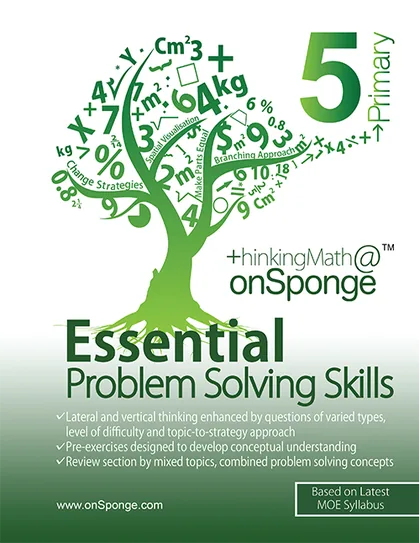
Essential Problem Solving Skills (EPSS)
P3 to P6, mixed ability. Scaffolded, with practice that gets harder step by step.
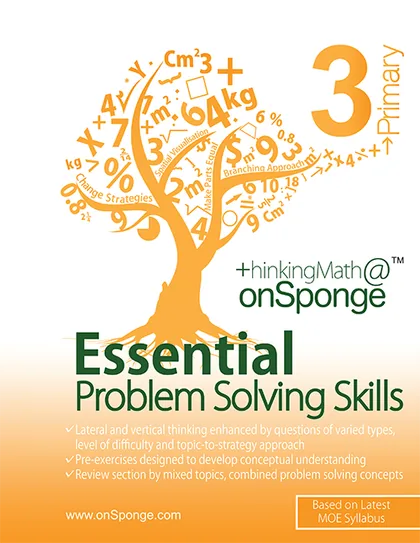
P3 Essential Problem Solving Skills
S$16.90Latest edition
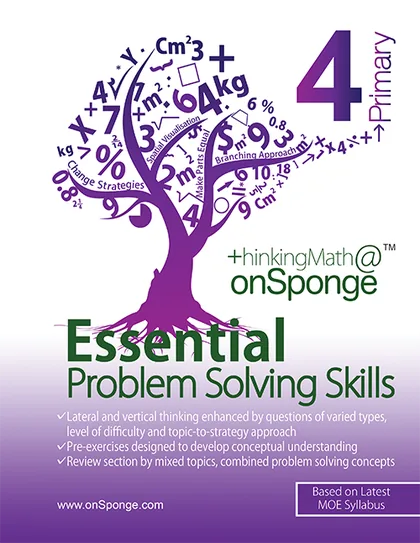
P4 Essential Problem Solving Skills
S$16.90Latest edition
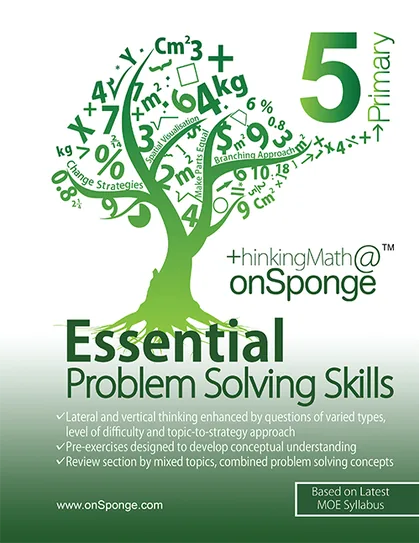
P5 Essential Problem Solving Skills
S$16.90Latest edition
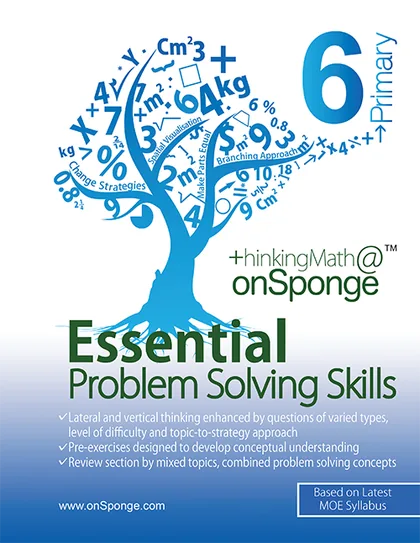
P6 Essential Problem Solving Skills
S$16.90New release
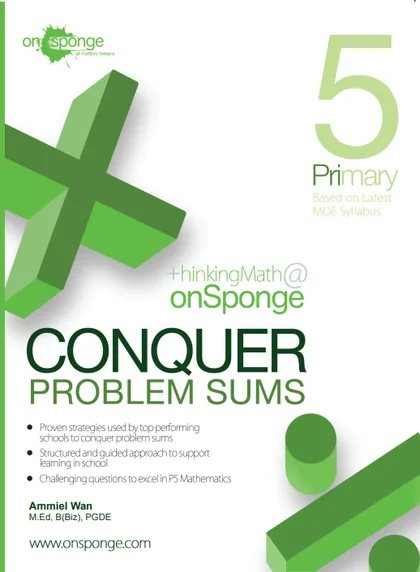
Conquer Problem Sums (CPS)
P3 to P6, higher ability. Worked examples that stretch a child past routine questions.
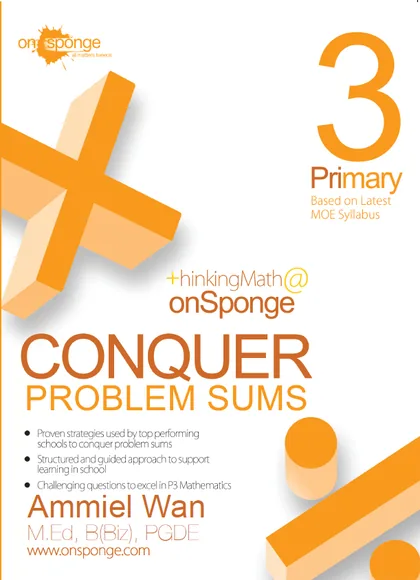
P3 Conquer Problem Sums
S$16.90Latest edition
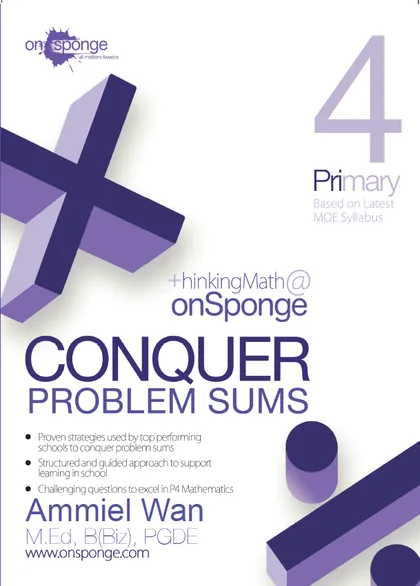
P4 Conquer Problem Sums
S$16.90Out of stock
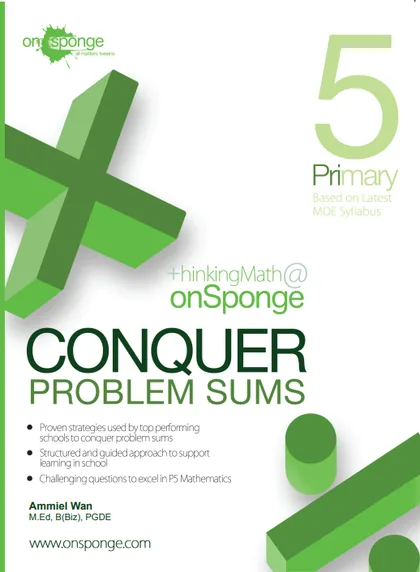
P5 Conquer Problem Sums
S$16.90Latest edition
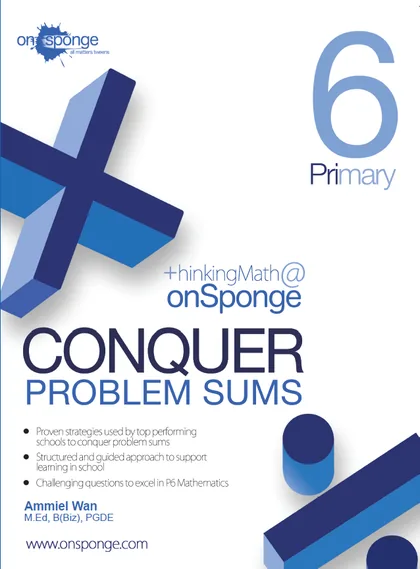
P6 Conquer Problem Sums
S$16.90New release
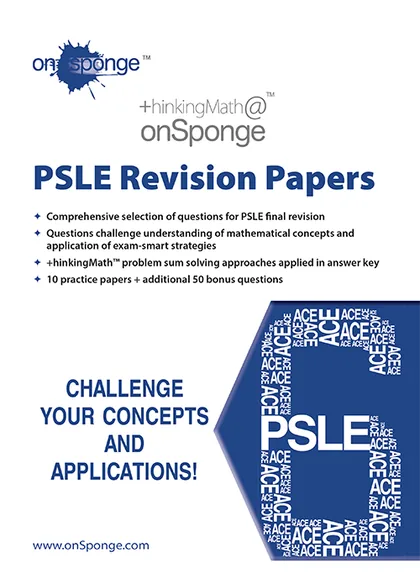
PSLE Revision Papers and Misconceptions Clarified
For the last stretch before PSLE Maths.
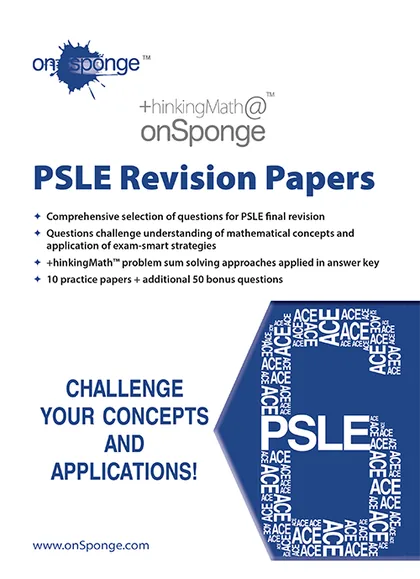
PSLE Revision Papers, 2026 edition
S$17.90New release
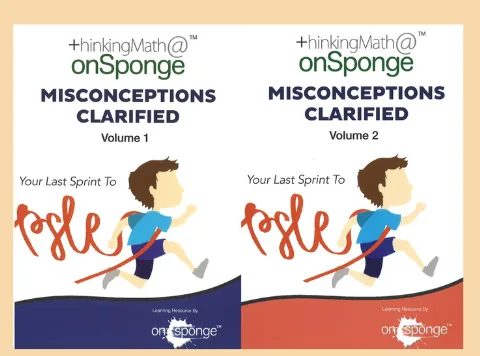
+hinkingMath Handy Guide, Misconceptions Clarified Volume 1
S$9.90
+hinkingMath Handy Guide, Misconceptions Clarified Volume 2
S$9.90
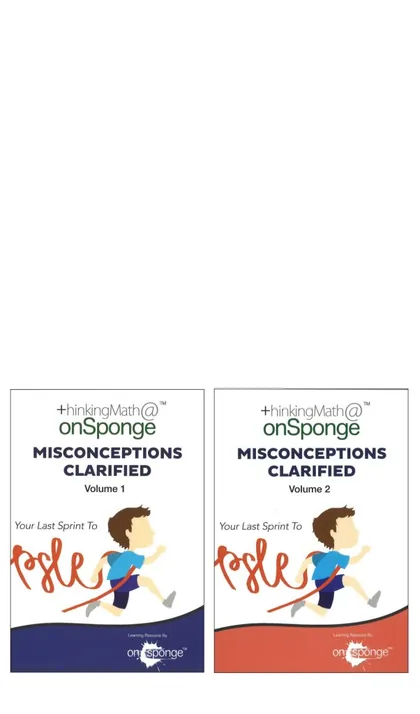
Quick Fix Bundle, Misconceptions Clarified Volumes 1 and 2
S$15.85Bundle
What the Misconceptions guides cover
Volume 1 covers Whole Numbers, Fractions, Ratio, Geometry, Area of Composite Figures, Area of Circles and Volume.
Volume 2 covers Algebra, Fractions, Percentage, Patterns, Area and Perimeter, and Volume.
The bundle costs S$3.95 less than buying both volumes separately (S$19.80 for the pair).
Essential or Conquer
How the two core series differ
Both follow the syllabus topic by topic and include full solutions. The difference is how much support each gives and how hard the questions get.
| Feature | Essential (EPSS) | Conquer (CPS) |
|---|---|---|
| Difficulty level | Two ticks out of three | Three ticks out of three |
| Topic by topic, in line with the MOE syllabus | Yes | Yes |
| Each topic supplemented with +hinkingMath concepts | Yes | Yes |
| "Let's Get Started" explains the basics before any question | Yes | No |
| "Let's Learn" shows worked examples | Yes | Yes |
| "Let's Think" tests understanding of the concepts | Yes | No |
| "Let's Practise" with up to six questions a unit | Yes, in rising order of difficulty | Yes, at varying levels of difficulty |
| Review questions at the end of selected chapters | Yes | No |
| Full solutions | Yes | Yes |
Inside the books
Sample pages from onSponge

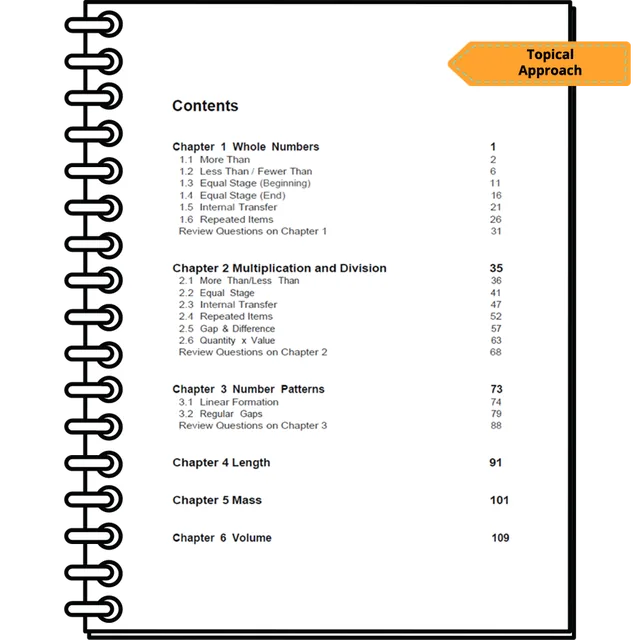
Chapters split into problem types such as More Than, Equal Stage and Internal Transfer, each with review questions.
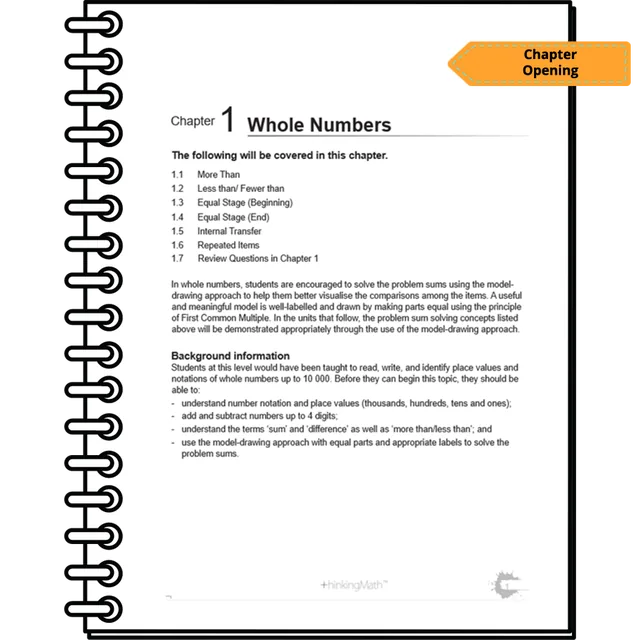
Explains the model-drawing approach and lists what a child should already know before starting.
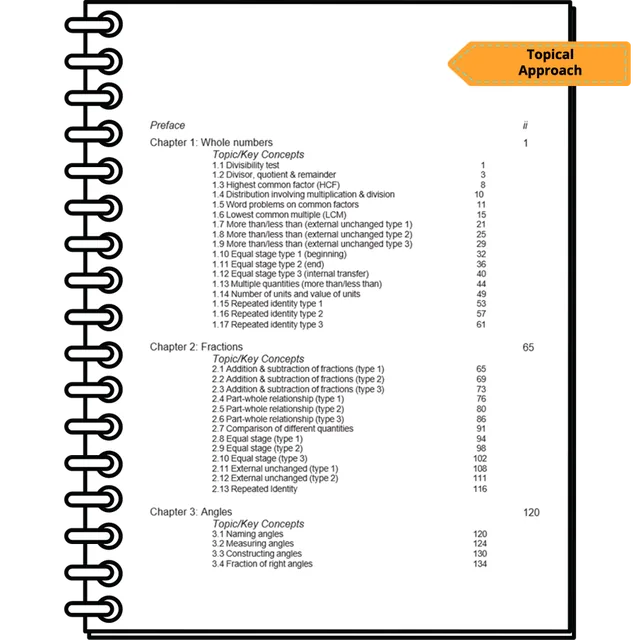
Topics and key concepts numbered one by one, from divisibility tests to angles.
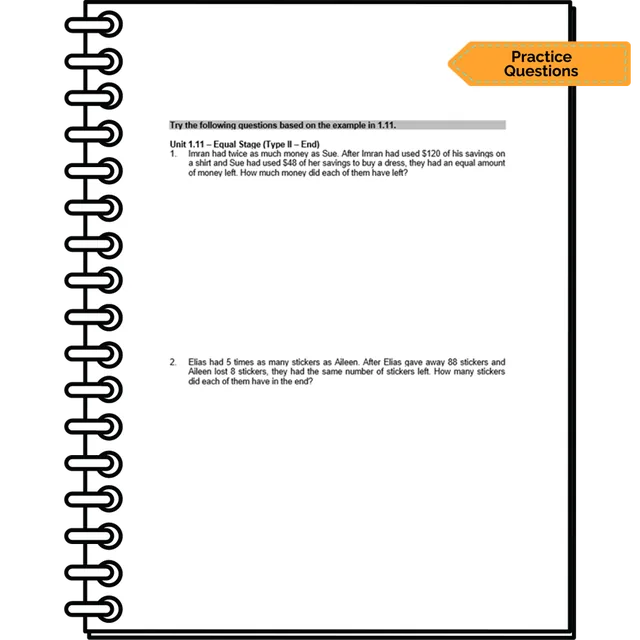
A worded question with open space underneath for the child's own working.
How useful are they
Where the books help and where they stop
What the books do well
- Each chapter opens by listing what your child should already know, so a gap shows up before the first question.
- Worked examples come before practice, and the sample practice page leaves room to write out the full working.
- Problem types carry names such as More Than and Equal Stage, so a parent can match a topic to a repeated mistake.
- Worked solutions exist for the core titles and download without a login.
- At S$16.90 or less, a book is a cheap way to find out whether home practice is enough.
What a book cannot do
- A book cannot see your child's working. A wrong answer shows, but the reason behind it does not.
- A child who cannot yet read a problem sum one sentence at a time may find the first line hard, whichever book is open.
- Solutions are separate PDFs, and some editions carry more than one "latest" label.
Which book for which child
This follows onSponge’s own guidance, matched to the titles above.
Still building confidence at P3 or P4Start with Essential for your child’s level. It explains the basics before it asks questions.
Finishes school maths quickly and wants moreConquer gives harder, non-routine questions once the core topics are secure.
P6 and PSLE is coming upPSLE Revision Papers for Paper 2 practice, with the Misconceptions guides alongside.
The same mistakes keep coming backThe Quick Fix Bundle targets common slips in word problems and costs less than the two guides bought separately.
Tips from our coaches
Make any workbook work harder
Practical tips from the Oodles Math blog, whichever book you pick.
Try our problem sum check
Our check has six problem sums for each level. It takes about 20 to 25 minutes, leaves space for working and gives one line on what to look out for with every answer. Here is one sample from each level.
P3 to P4 check
Vernon and Bella had the same number of T-shirts. After Bella bought another 4 T-shirts, she had 2 times as many T-shirts as Vernon.
How many T-shirts did Bella have in the end?
8 T-shirts. Look out for the phrase “in the end”. It refers to Bella, not to Vernon and not to Bella’s starting amount.
P4 to P5 check
Jacintha had 5 times as many beads as Anne. After Jacintha used 180 beads, she had the same number of beads as Anne.
How many beads did Jacintha have at first?
225 beads. Anne is 1 unit and Jacintha is 5 units, so the 180 beads used equal 4 units, not 5.
P5 to P6 check
Adrian and Kingston had the same number of sweets at first. After Adrian gave away 105 sweets and Kingston gave away 49 sweets, Kingston had 5 times as many sweets as Adrian.
How many sweets did each of them have at first?
119 sweets each. Both started equal, so the gap at the end is 4 units, which is 105 take away 49 is 56. Find 1 unit, then add back what Adrian gave away.
Six habits that help at home
Read one sentence at a timeBuild the picture as you go, and draw before you calculate.
Check the answer against the questionAsk whether the number found is the one the question asked for.
Let your child try firstA little struggle builds understanding. Give hints before you give answers.
Ask “How did you get that?”The working shows where a child is stuck. Keep it handwritten.
Sort slips from gapsIf the same error repeats and your child cannot explain it, go back to objects or drawings.
Keep it short and regularTen minutes, three times a week, beats one long session. Stop when attention drops.
Watch for three slips that cost marks: adding the denominators when adding fractions, thinking a longer decimal is bigger (0.5 is greater than 0.45), and mixing up “of the rest” with “of the total” in percentage problems. The Misconceptions guides above cover slips like these.
What is new at each level
| Level | New topics |
|---|---|
| P3 | Equivalent fractions, area and perimeter, angles, perpendicular and parallel lines, bar graphs with different scales, division with remainder |
| P4 | Factors and multiples, symmetry, decimals, pie charts, nets |
| P5 | Percentage, rate, area of a triangle, volume, triangles and four-sided figures |
| P6 | Ratio, algebra, circles, average |
PSLE Maths has two papers of 50 marks each from 2026. According to SEAB, Paper 1 now counts as much as Paper 2, so Paper 2 practice covers half the marks. Keep fractions, decimals and times tables in your daily practice as well.
Book or coach
When a workbook is enough, and when a coach helps
A workbook is probably enough when
- Your child enjoys maths and reads word problems on their own.
- Mistakes are careless slips that disappear with more practice.
- You want extra questions that match what school is teaching.
A coach helps when
- The same errors return after weeks of practice.
- Your child freezes at the first sentence of a problem sum.
- Evenings go on re-teaching and your child still has questions.
- An exam is coming up and you want to know which topics to start with.
As the Sole Certified Math Tuition Partner of onSponge since 2010, Oodles Math runs a diagnostic that finds which topics are weak, so practice goes where it counts, and coaches check understanding live in every lesson. The workbooks work well as home practice alongside lessons.
Before you buy
Delivery, returns and free shipping
| Delivery fee | S$3.99, free from S$50 |
| Delivery time | Within 7 working days, couriered between 9am and 9pm |
| Self-collection | Not offered |
| Returns | Non-refundable and non-exchangeable, except wrong or damaged items. Report these within 3 days of receipt. |
| Payment | PayPal, debit cards and credit cards |
| Overseas | Through onSponge's partner Open School Bag |
| Schools and group buys | Bulk orders are handled by onSponge's book team, by email or WhatsApp |
Reaching free shipping
One book never qualifies, so a small set is the practical route. We worked these out from the listed prices.
- P6 Essential, P6 Conquer and PSLE Revision Papers come to S$51.70, which clears S$50.
- Any two core books plus the Quick Fix Bundle come to S$49.65, which misses by S$0.35.
Check your cart before you pay, because onSponge sets the final total.
Ready to buy? onSponge sells the books directly.
Questions
Common questions about onSponge workbooks
onSponge says they are. The P5 Essential listing states it is aligned with the 2021 Mathematics Syllabus, and the workbooks page says the books supplement the MOE maths syllabus and are reviewed and updated regularly. We have not compared each title against MOE documents.
Choose Essential if your child needs step-by-step support or is still building confidence. Choose Conquer if the core topics are already secure and your child wants harder, non-routine questions. Essential also explains the basics before each unit, which Conquer does not.
Worked solutions are available as PDF booklets on onSponge’s Downloadable Solutions page for P3 to P6, with no login. Some titles appear under more than one “latest” edition, so match the edition on your cover.
They give a child plenty of practice, including a PSLE Revision Papers title for Paper 2. From 2026, PSLE Maths has two papers of 50 marks each, so Paper 2 practice covers half the marks. Whether that is enough depends on why your child loses marks. If the same errors keep returning, a diagnostic and a coach usually find the cause faster than more worksheets.
The workbooks cover P3 to P6 only.
S$3.99, and free when your order reaches S$50. Delivery takes up to 7 working days and self-collection is not offered.
Oodles Math is the Sole Certified Math Tuition Partner of onSponge and has been since 2010. We wrote this page as a plain guide to the books, and it says where a detail comes from onSponge itself.